PLASMA SPRAY EQUIPMENT
AND COATING SYSTEMS.
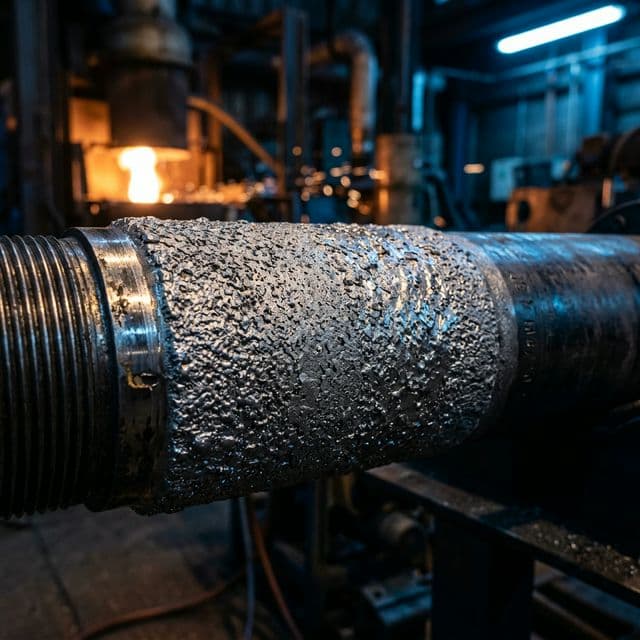
Metaflux Spray Solutions manufactures atmospheric plasma spray equipment in Pimpri-Chinchwad, Pune, India, for applying ceramic coatings such as yttria-stabilised zirconia, alumina and chrome oxide to turbine, textile, industrial and medical components.
What Is Plasma Spray?
A DC arc inside the gun ionises argon or nitrogen into a plasma jet reaching 8,000 – 15,000 °C. Powder injected into that jet melts and is carried onto the workpiece at 200 – 400 m/s. Because the jet is far hotter than any oxy-fuel flame, plasma spray handles ceramics and refractory metals — zirconia, alumina, chrome oxide, molybdenum — that HVOF and flame spray cannot fully melt.
Where HVOF wins on density and bond strength for carbides, plasma wins on material range and on deliberately porous, strain-tolerant structures such as thermal barrier coatings. Most coating shops end up running both, which is why our plasma cells share the same powder feeders and gas control hardware as our HVOF plants.
PLASMA SPRAY SYSTEMS.
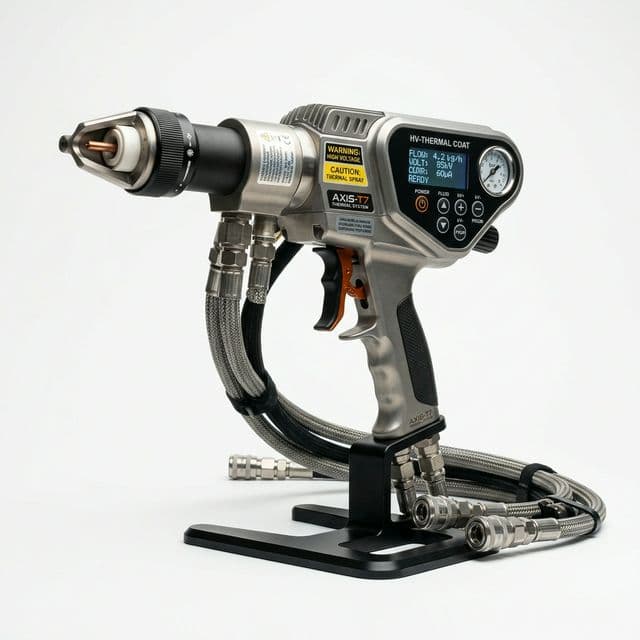
Atmospheric Plasma Spray System
Water-cooled plasma gun, DC power source, gas control console and closed-loop chiller supplied as one commissioned package.
Ceramic Coating Cell
Acoustic booth, turntable or lathe manipulator, dust extraction and powder feeders configured for continuous ceramic coating production.
TYPICAL
SPECIFICATIONS.
Typical operating data for a 40 – 80 kW atmospheric plasma spray cell including gun, power source and gas console. Exact specifications vary by configuration — request a datasheet for the model you are evaluating.
| Parameter | Typical Range |
|---|---|
| Process | Atmospheric Plasma Spray (APS) |
| Gun Power | 40 – 80 kW |
| Operating Current | 300 – 900 A DC |
| Operating Voltage | 40 – 80 V DC |
| Primary Plasma Gas | Argon or Nitrogen |
| Secondary Plasma Gas | Hydrogen or Helium |
| Plasma Gas Flow | 30 – 100 SLPM |
| Plasma Jet Temperature | 8,000 – 15,000 °C at the nozzle exit |
| Powder Feed Rate | 20 – 100 g/min |
| Particle Velocity | 200 – 400 m/s |
| Spray Distance | 75 – 150 mm |
| Coating Porosity | 1 – 5%, tunable by parameter set |
| Bond Strength | 25 – 60 MPa, material dependent |
| Coating Thickness | 100 – 1,000 microns |
| Powder Compatibility | YSZ, Alumina, Alumina-Titania, Chrome Oxide, Hydroxyapatite, MCrAlY, Molybdenum |
| Gun Cooling Water | 12 – 20 l/min at 7 bar, closed-loop chiller |
| Power Supply | 415 V, 3 phase, 50 Hz |
FREQUENTLY ASKED
QUESTIONS.
The questions coating shops and materials engineers ask most often about atmospheric plasma spray equipment.
What is plasma spray used for?
Plasma spray is used to apply ceramic and refractory coatings that oxy-fuel processes cannot melt. The common applications are yttria-stabilised zirconia thermal barrier coatings on gas turbine and burner components, alumina and chrome oxide wear coatings on textile guides, anilox and pump sleeves, alumina dielectric layers on rolls and semiconductor fixtures, and hydroxyapatite layers on orthopaedic implants.
Which powders can a plasma spray system apply?
An atmospheric plasma spray system applies YSZ, alumina, alumina-titania, chrome oxide, hydroxyapatite, MCrAlY and molybdenum powders. The plasma jet reaches 8,000 to 15,000 °C at the nozzle exit, which is why it melts oxide ceramics and refractory metals that HVOF and flame spray only soften.
What is the difference between plasma spray and HVOF?
Plasma spray is hotter and slower; HVOF is cooler and much faster. Plasma particle velocity is typically 200 to 400 m/s against 600 to 850 m/s for HVOF, so HVOF gives denser carbide coatings while plasma covers a far wider material range and can produce the deliberately porous, strain-tolerant structures used in thermal barrier coatings. Metaflux Spray Solutions manufactures both, and the plasma cells share powder feeders and gas control hardware with the HVOF plants.
What utilities does a plasma spray cell need?
A 40 to 80 kW atmospheric plasma spray cell runs on a 415 V, 3 phase, 50 Hz supply, argon or nitrogen as the primary plasma gas with hydrogen or helium as the secondary, and 12 to 20 l/min of cooling water at 7 bar from a closed-loop chiller. Plasma spraying is loud and generates fume, so the cell is normally supplied with an acoustic booth and dust extraction.
Can plasma spray coat components in a lathe or on a robot?
Yes. A Metaflux plasma spray gun can be hand-held, lathe-mounted or robot-mounted, and the ceramic coating cell is configured with a turntable or lathe manipulator for continuous production. Spray distance is short — typically 75 to 150 mm — so consistent gun-to-work standoff and traverse speed matter more with plasma than with wire processes.
How much does a plasma spray system cost in India?
Metaflux Spray Solutions quotes plasma spray system prices on request, because the price depends on gun power rating, the number of powder feeders, and whether the acoustic booth, manipulator, chiller and extraction are part of the turnkey scope. Send the coating material and component details through the enquiry form on this page for a written quotation from Pune.
Plasma Spray Applications
and Ceramic Coatings.
Thermal Barriers
YSZ over an MCrAlY bond coat on gas turbine and burner components.
Wear Ceramics
Alumina and chrome oxide on textile guides, anilox and pump sleeves.
Medical Implants
Hydroxyapatite and porous titanium layers for orthopaedic implants.
Dielectric Layers
Alumina insulation on rolls, chucks and semiconductor fixtures.