Thermal spray gun manufactured in Pune, India by Metaflux Spray Solutions
National Supply — Built in Pune

Thermal Spray Equipment Manufacturer In India.

Metaflux Spray Solutions is a thermal spray equipment manufacturer and abrasive blasting machine manufacturer in India, building metallizing guns, twin wire arc spray systems, HVOF coating plants, plasma spray equipment, powder feeders, gas flow meters, blast rooms and shot blasting machines at its works in Pimpri-Chinchwad, Pune, Maharashtra, and supplying them to power plants, steel and cement plants, refineries, paper and sugar mills, pump and valve makers, railways and fabricators across India since 2013.

Manufacturing

Pimpri-Chinchwad, Pune

Area Served

All India + Middle East

Equipment Families

Thermal Spray + Blasting

Scope

Supply, Commission, Train, Spare
The Complete Range

Thermal Spray And Blasting Equipment, Both Halves.

A sprayed coating is two operations, not one: the blast that creates the anchor profile and the spray that keys into it. Metaflux Spray Solutions manufactures both families, so the surface preparation specification and the coating specification are written together rather than by two vendors who never speak to each other.

Family One

Thermal Spray and Metallizing Equipment

  • Wire flame spray / metallizing guns

    Oxy-fuel wire guns for zinc, aluminium and zinc-aluminium wire. The workhorse of structural steel corrosion protection in India, where the process is usually called metallizing or metalizing.

  • Twin wire arc spray systems

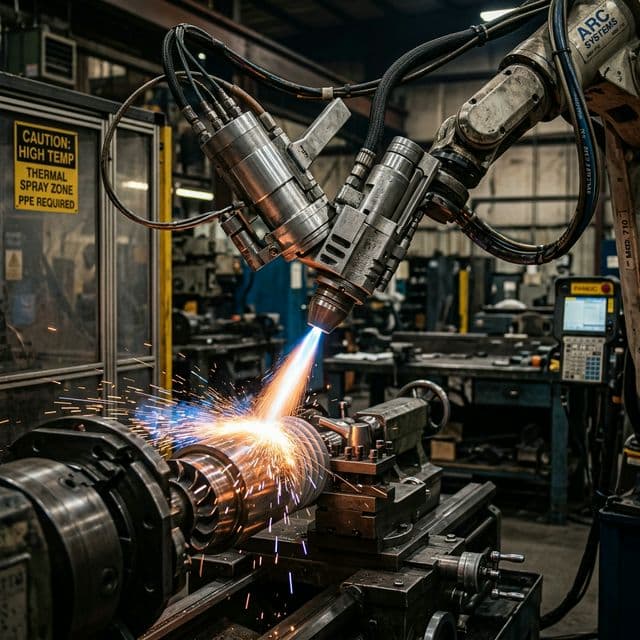
    Gun, wire feed unit and control panel for high deposition rates on large areas — tanks, penstocks, girders and vessel exteriors — with no combustion gases to handle.

  • HVOF coating plants

    Liquid or gas fuel high velocity oxy-fuel plants for dense, low-porosity tungsten carbide and chrome carbide wear coatings on rods, sleeves, plungers and valve trim.

  • Plasma spray equipment

    Gun, power supply and gas console for ceramics and high melting point materials — alumina, chromia, zirconia and bond coats that a flame cannot melt.

  • Powder flame spray guns

    Oxy-fuel powder guns for self-fluxing NiCrBSi alloys, bronzes and spray-and-fuse work on shafts, rolls and hardfaced wear surfaces.

  • Thermal spray powder feeders

    Volumetric powder feeders that meter powder into flame, HVOF and plasma guns at a steady rate — the difference between a repeatable coating and a variable one.

  • Gas flow meters and control units

    Flow meters and control units for setting oxygen, fuel gas and compressed air so a spray parameter sheet can actually be reproduced on the shop floor.

  • Tube mill coating plants

    In-line metallizing plants that coat tube and pipe as it leaves the mill, so corrosion protection happens in the production line rather than as a second handling operation.

  • Thermal spray spares and consumables

    Nozzles, air caps, wire guides, electrodes and contact tips — the wear parts that decide whether an installed gun keeps running or waits on an order.

View the thermal spray category
Family Two

Abrasive Blasting Equipment

  • Blast rooms and enclosures

    Walk-in rooms with abrasive recovery, dust collection and operator protection, sized to the largest fabrication the shop actually handles.

  • Airless shot blasting machines

    Wheel blast machines for descaling, de-sanding and deburring castings, forgings, plate and structurals ahead of coating or machining.

  • Sand blasting machines

    Pressure-pot machines and cabinets for cleaning and profiling. Grit blasting to a defined anchor profile is what a sprayed coating keys into.

  • Portable blasters

    Site blast pots for structures, tanks, pipelines and bridges, where the work cannot come to the blast room.

  • Blasting spares and media handling

    Blast nozzles, hoses, couplings, filter cartridges and media recovery parts to keep an installed blasting line in service.

  • Turnkey coating systems

    Surface preparation, spray booth, exhaust, dust collection and controls specified as one line and commissioned as one line, by one supplier.

View the blasting category
Industries Served Across India

Which Component, Which Process.

Buyers rarely start from a process. They start from a component that is wearing, corroding or running undersize. The mapping below is the ordinary surface engineering practice behind each sector, and it is how Metaflux Spray Solutions specifies equipment against a job rather than against a catalogue.

Power generation and boilers

Components coated

Boiler water-wall tubes, superheater and economiser tubes, ID and PA fan blades, coal mill components, ash handling pipework

Process used

Twin wire arc spray, HVOF, powder flame spray

Fly-ash erosion and high-temperature oxidation are the two failure modes. NiCr and Ni-base wires are arc sprayed onto water-wall panels in situ during an outage; chrome carbide-NiCr is applied by HVOF where the service temperature is high enough that tungsten carbide would oxidise.

Steel plants and rolling mills

Components coated

Table rollers, pinch rolls, mandrel bars, hearth rolls, continuous casting components, mill housings

Process used

Twin wire arc spray, powder flame spray and fuse, plasma spray

Roll work splits into two jobs: dimensional restoration of a worn journal or barrel, and a hard surface that survives scale and hot strip contact. Ceramic coatings applied by plasma spray are used where the roll must resist both heat and pick-up.

Cement plants

Components coated

Vertical mill rollers and table segments, separator vanes, fan rotors, chute and duct liners, kiln seal components

Process used

Powder flame spray hardfacing, twin wire arc spray

Raw meal and clinker dust are abrasive rather than corrosive. Hardfacing and thick metallized build-up are used to return a worn grinding surface to profile without removing the part from the plant where the geometry allows it.

Oil, gas and petrochemical

Components coated

Gate and ball valve seats and balls, pump plungers, wellhead components, downhole tools, splash-zone structural steel

Process used

HVOF (WC-Co, WC-Co-Cr), arc spray aluminium

Valve trim is the classic HVOF job: a WC-Co-Cr coating survives both erosion and the chloride environment. Thermally sprayed aluminium is the standard answer for offshore and splash-zone steel where organic paint alone does not last.

Pumps, valves and rotating equipment

Components coated

Pump shafts and sleeves, wear rings, impellers, mechanical seal faces, hydraulic and piston rods

Process used

HVOF WC-Co, plasma sprayed ceramic, powder flame spray

HVOF tungsten carbide is the usual replacement for hard chrome plating on rods and sleeves because it is a dry process with no hexavalent chromium bath. Plasma sprayed alumina and chromia are used on seal faces and where an electrically insulating surface is wanted.

Paper and pulp mills

Components coated

Dryer cylinders, suction and press rolls, doctor blades, yankee cylinders, headbox components

Process used

Plasma spray (Cr₂O₃, Al₂O₃-TiO₂), HVOF carbide, arc spray

Paper machine rolls need a hard, fine-finished surface that releases the sheet and tolerates a doctor blade. Chromia applied by plasma spray and ground to a controlled finish is the long-standing solution.

Sugar mills

Components coated

Mill roller shells and arcing, cane knives and shredder hammers, juice pump wet ends, evaporator components

Process used

Hardfacing and powder flame spray, arc spray

Sugar mill roller arcing is a seasonal, high-wear job carried out between crushing seasons. Cane-handling components combine abrasion from soil and silica with wet, mildly acidic juice, so the surface has to resist both.

Infrastructure, bridges and structural steel

Components coated

Bridge girders, transmission towers, penstocks, storage tank exteriors, gantries and port structures

Process used

Wire flame spray and twin wire arc spray of zinc, aluminium and 85/15 zinc-aluminium

Metallizing gives sacrificial, long-life corrosion protection on fabricated steel that is too large for a galvanising kettle. The coating is only as good as the blast profile under it, which is why the blast equipment and the spray equipment belong to the same specification.

Railways and rolling stock

Components coated

Underframes, bogie components, wagon bodies, bridge and structural fabrications, workshop reclamation of shafts and journals

Process used

Arc spray metallizing, powder flame spray for dimensional restoration

Railway workshops use metallizing both for corrosion protection of fabricated steel and for building worn shafts and housings back to size instead of scrapping them.

Defence, aerospace and turbine MRO

Components coated

Turbine and compressor hardware, abradable seals, bond coats, dimensional restoration of shafts and housings

Process used

Plasma spray, HVOF

This work is governed by the customer's own approved process specification. Metaflux Spray Solutions supplies the plasma and HVOF hardware, powder feeders and gas control; qualifying a coating against a defence or aerospace specification remains the coating shop's responsibility.

Automotive and general engineering

Components coated

Crankshaft and camshaft journals, synchroniser rings, hydraulic cylinder rods, machine tool ways, tooling and dies

Process used

HVOF, plasma spray, powder flame spray, shot blasting for surface preparation

General engineering shops usually start with one flame spray or arc spray gun for reclamation work and add HVOF once carbide coatings become a repeat requirement rather than an occasional one.

Foundries, forging and fabrication

Components coated

Castings, forgings, weldments, plate and structural sections before painting or coating

Process used

Airless shot blasting, grit blasting, blast rooms

Blast cleaning is where most coating failures are prevented. Wheel blast machines handle volume descaling; a blast room handles the fabrication that is too large or too awkward for a machine.

Choosing Between Processes

Four Questions Before You Buy A Gun.

  1. 01

    What is the coating meant to survive?

    Corrosion on large fabricated steel points to zinc or zinc-aluminium wire and therefore to wire flame spray or arc spray. Abrasive or erosive wear points to carbides and therefore to HVOF. Heat and chemical attack point to ceramics and therefore to plasma spray.

  2. 02

    How much area, and how fast?

    Deposition rate, not coating quality, usually decides the process on a large structure. Twin wire arc spray puts down far more metal per hour than a wire flame gun; on a small precision component that advantage is irrelevant.

  3. 03

    Can the part be finished after spraying?

    HVOF and plasma coatings are normally ground or superfinished. If the shop has no grinding capacity, that changes the equipment specification and sometimes the process choice.

  4. 04

    What preparation can the shop actually do?

    There is no point specifying a dense carbide coating if the blast facility cannot produce and keep a clean anchor profile. This is the question that most often determines whether a blast room or shot blasting machine belongs in the same order.

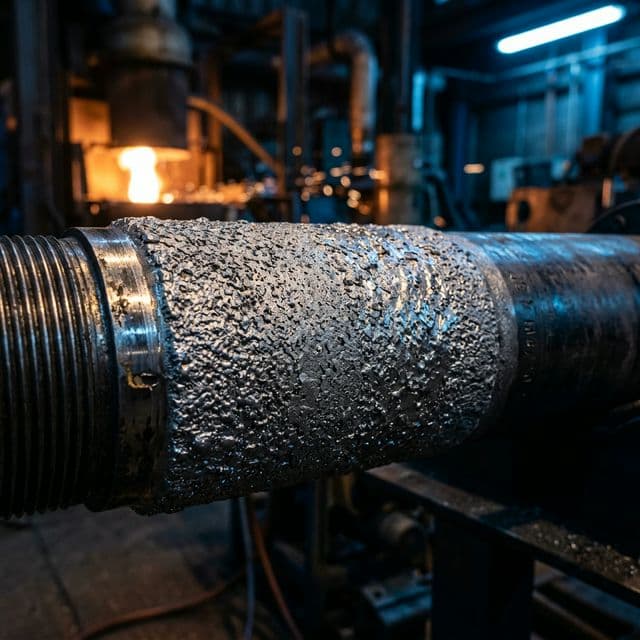
Macro view of a thermal spray coating cross-section on a steel substrate
Supplying Across India

One Factory In Pune. Consignments Nationwide.

Metaflux Spray Solutions operates a single manufacturing facility, at Sector 24, Plot 10A, Pimpri-Chinchwad, Pune. There are no branch works and no regional depots. Every machine, every spare and every commissioning engineer travels from Pune, which is stated here deliberately: an industrial buyer shortlisting a supplier is entitled to know exactly where the equipment is built and who is accountable for it.

Regions Supplied From The Pune Works

Maharashtra and Goa
Gujarat
Karnataka and Telangana
Tamil Nadu and Kerala
Andhra Pradesh
Delhi NCR, Haryana and Punjab
Rajasthan
Uttar Pradesh and Uttarakhand
Madhya Pradesh and Chhattisgarh
West Bengal, Odisha and Jharkhand
Bihar and the North East
Himachal Pradesh and Jammu

Equipment is also exported to customers in the Middle East by sea freight. Quality is managed under an ISO 9001:2015 system — certificate details are published on the certification page.

Dispatched from Pune

Every machine is built, tested and dispatched from the Pimpri-Chinchwad works. Guns and portable equipment move by surface courier; blast rooms, shot blasting machines and turnkey lines move as road consignments against a packing list agreed before dispatch.

Installation and commissioning

Larger plant — blast rooms, HVOF and plasma cells, tube mill lines — is commissioned on site by Metaflux engineers travelling from Pune. Commissioning covers utility connection, gas and power set-up, trial running and first coating trials on the customer's own coupons.

Operator training

A spray gun set to the wrong gas pressure, spray distance or traverse speed produces a coating that fails inspection. Operator training covers parameter setting, gun maintenance, nozzle changes, surface preparation and the safety practice the process demands.

Spares against the machine model

Nozzles, air caps, wire guides, electrodes, blast nozzles and filter cartridges are consumables, not failures. Spares are despatched against the model and serial of the machine actually installed, so a worn wear part does not turn into a redesign.

Indian Manufacture Versus Import

What Changes When The Machine Is Built Here.

Imported thermal spray equipment is well engineered and there are jobs — particular aerospace and turbine specifications among them — that call for a specific approved system. For most Indian coating shops, maintenance workshops and fabricators, the deciding factors are commercial and logistical rather than metallurgical.

Lead time measured in weeks, not shipping cycles

A domestically built machine skips sea freight, port handling, customs clearance and inland transhipment. For a plant with an outage window fixed months in advance, that difference decides whether the equipment is on site for the shutdown.

Spares from Pune rather than an overseas order cycle

Thermal spray guns and blast machines consume wear parts continuously. An imported machine ties every nozzle and air cap to a foreign purchase order; a domestic one does not.

Service response inside the country

When a gun stops arcing or a dust collector stops pulsing, the useful question is how quickly an engineer who knows the machine can reach it. In-country manufacture keeps that answer in days rather than in visa and travel schedules.

Rupee pricing, Indian invoicing

Quotations, purchase orders, GST invoicing and payment all happen in rupees. There is no letter of credit, no forex exposure between order and delivery, and no customs duty or clearing agent to budget for.

Built around what an Indian site actually has

Power supply, industrial oxygen and LPG availability, ambient dust and humidity, and locally available abrasives and wires are ordinary design inputs rather than assumptions carried over from another market.

Training in the language the shop floor speaks

Commissioning and operator training are carried out in English, Hindi or Marathi. Documentation that the operators can actually read is worth more than documentation that is technically complete.

Buyer Questions

Thermal Spray Equipment In India, Answered.

Who manufactures thermal spray equipment in India?

Metaflux Spray Solutions manufactures thermal spray and metallizing equipment in India from its works at Sector 24, Plot 10A, Pimpri-Chinchwad, Pune, Maharashtra. The range covers wire flame spray (metallizing) guns, twin wire arc spray systems, HVOF coating plants, plasma spray equipment, powder flame spray guns, powder feeders, gas flow meters and tube mill coating plants, alongside abrasive blasting equipment including blast rooms, shot blasting machines, sand blasting machines and portable blasters. Equipment is designed, built and tested at the Pune facility and supplied to customers across India.

What does a thermal spray system cost in India?

Metaflux Spray Solutions quotes thermal spray systems per configuration rather than from a price list, because the price depends on the process, the duty and the scope. A single wire flame spray gun with a control unit sits at one end of the range and a complete HVOF or plasma cell with booth, manipulator, powder feeder, gas console and dust extraction sits at the other. Send the component, substrate, coating material and expected throughput through the enquiry form and Metaflux Spray Solutions will issue a written quotation from Pune.

Does Metaflux Spray Solutions supply across India?

Yes. Metaflux Spray Solutions supplies customers throughout India from a single manufacturing facility in Pimpri-Chinchwad, Pune. Machines are dispatched by road and surface courier to Maharashtra, Gujarat, Karnataka, Tamil Nadu, Telangana, Andhra Pradesh, Rajasthan, Delhi NCR, Punjab, Haryana, Uttar Pradesh, Madhya Pradesh, Chhattisgarh, Odisha, Jharkhand, West Bengal and the North East, and installation, commissioning and operator training are carried out on the customer's site by engineers travelling from Pune. Metaflux Spray Solutions also exports to the Middle East.

What is the difference between metallizing and thermal spray?

Thermal spray is the general term for every process that melts a wire or powder and propels it onto a surface, including wire flame spray, twin wire arc spray, powder flame spray, HVOF and plasma spray. Metallizing, also spelled metalizing, is the Indian industry's everyday name for the subset that sprays zinc, aluminium or zinc-aluminium wire onto steel for corrosion protection, usually by wire flame spray or arc spray. Every metallizing job is thermal spray; not every thermal spray job is metallizing.

Do you provide installation and operator training?

Yes. Metaflux Spray Solutions installs and commissions equipment on the customer's site, covering utility connection, gas and power set-up, trial running and first coating trials. Operator training covers spray parameter setting, gun maintenance and nozzle changes, surface preparation and anchor profile, and the safety practice each process requires. Training is delivered in English, Hindi or Marathi.

What after-sales support is available for thermal spray equipment in India?

After-sales support from Metaflux Spray Solutions covers spares and consumables despatched against the model and serial number of the installed machine, technical support on spray parameters and coating problems, and site attendance for breakdowns and overhauls. Wear parts such as nozzles, air caps, wire guides, electrodes, blast nozzles and filter cartridges are supplied for the equipment Metaflux Spray Solutions manufactures. Support enquiries go to +91 72399 92555 or Info@metafluxspraysolutions.com.

Which industries in India use thermal spray and metallizing equipment?

Thermal spray and metallizing equipment is used across Indian industry: power generation for boiler tubes and fan components, steel plants and rolling mills for rolls and casting hardware, cement plants for grinding elements, oil and gas and petrochemical for valve trim and pump parts, paper and sugar mills for rolls and cane-handling components, pumps and valves for shafts and sleeves, railways and infrastructure for structural steel corrosion protection, and defence, aerospace and turbine MRO for plasma and HVOF coatings. Metaflux Spray Solutions supplies the equipment used in all of these sectors.
Send The Component. Get The Specification.

Tell Metaflux Spray Solutions the component, the substrate, the wear or corrosion problem and the throughput you need, and the equipment will be specified against that job — not picked off a catalogue page. Quotations are issued in writing from the Pune works.

+91 72399 92555Info@metafluxspraysolutions.com