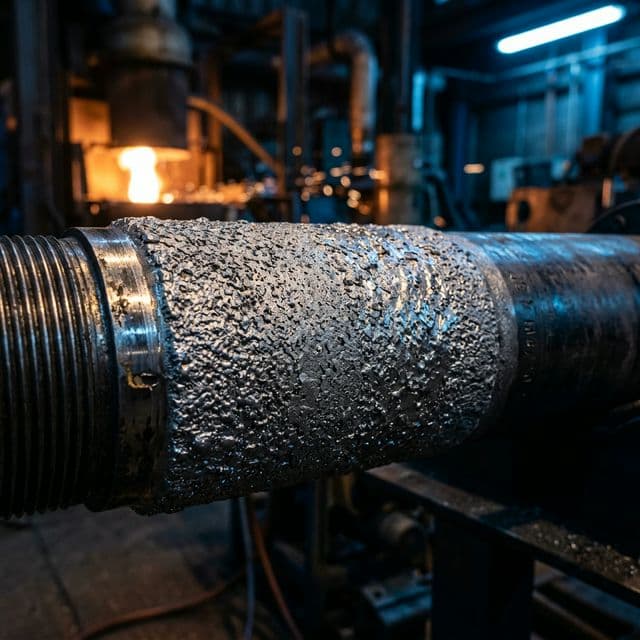
Thermal Spray Coating Materials.
Metaflux Spray Solutions manufactures the thermal spray equipment that deposits the four main industrial coating materials — tungsten carbide (WC-Co), chrome carbide (Cr₃C₂-NiCr), Stellite 6 cobalt alloy, and zinc and zinc-aluminium for metallizing — from its works in Pimpri-Chinchwad, Pune, India.
The coating material decides the outcome; the spray process is chosen to suit it. These four cover most industrial requirements — carbides for wear, a cobalt alloy for galling and impact, and sacrificial zinc-aluminium for corrosion protection of structural steel.
Material Comparison.
| Material | Hardness | Spray Process | Max Service Temp | Primary Role |
|---|---|---|---|---|
| Tungsten Carbide (WC-Co) | 1,100–1,350 HV0.3 | HVOF | ~500 °C | Abrasive and sliding wear, hard chrome replacement |
| Chrome Carbide (Cr₃C₂-NiCr) | 800–1,000 HV0.3 | HVOF or plasma spray | ~900 °C | Hot erosion, boiler tubes, flue gas corrosion |
| Stellite 6 (Co-Cr-W) | ~40–46 HRC (400–450 HV) | Powder flame, HVOF, arc or wire flame spray | ~500–600 °C | Galling, cavitation, impact and rebuilding to size |
| Zinc and Zinc-Aluminium | ~30–70 HV | Wire flame spray (metallizing) or arc spray | ~200 °C zinc, ~550 °C aluminium | Sacrificial corrosion protection of structural steel |
Tungsten Carbide (WC-Co)
The hardest coating in routine thermal spray production and the standard answer to abrasive, sliding and erosive wear on metallic components below about 500 °C. It is also the coating that replaced hard chrome plating on hydraulic rods and landing gear.
Read the datasheet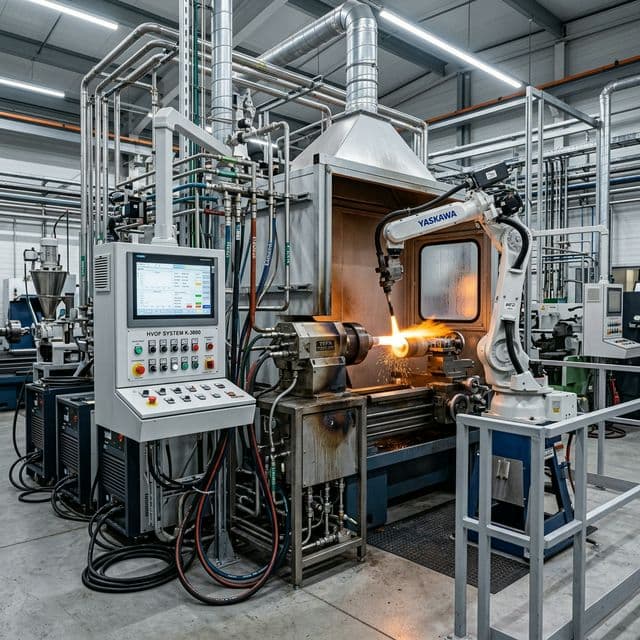
Chrome Carbide (Cr₃C₂-NiCr)
The high-temperature carbide. Where tungsten carbide starts to oxidise at around 500 °C, chrome carbide in a nickel-chromium binder keeps working to roughly 900 °C — which is why it is the coating on boiler tubes, ID fan blades and exhaust valve seats.
Read the datasheet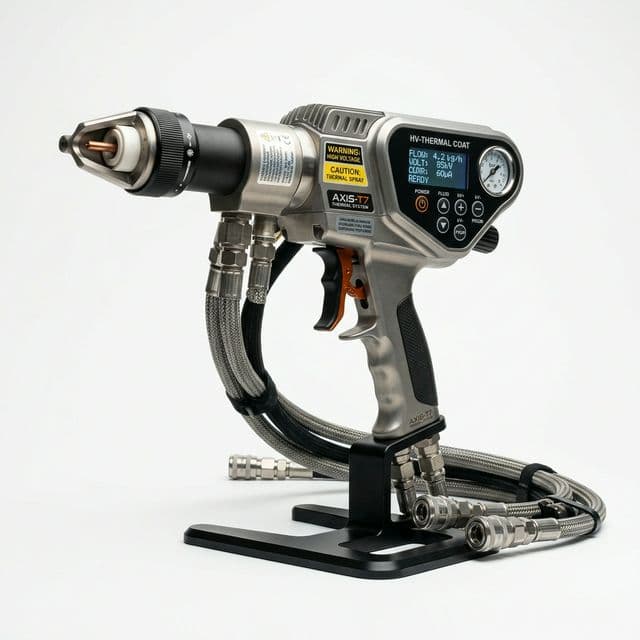
Stellite 6 (Co-Cr-W)
A cobalt-chromium-tungsten hardfacing alloy for the wear that carbides handle badly: metal-to-metal galling, cavitation, impact and thermal cycling. Softer than a cermet, far tougher, and it machines and grinds conventionally.
Read the datasheet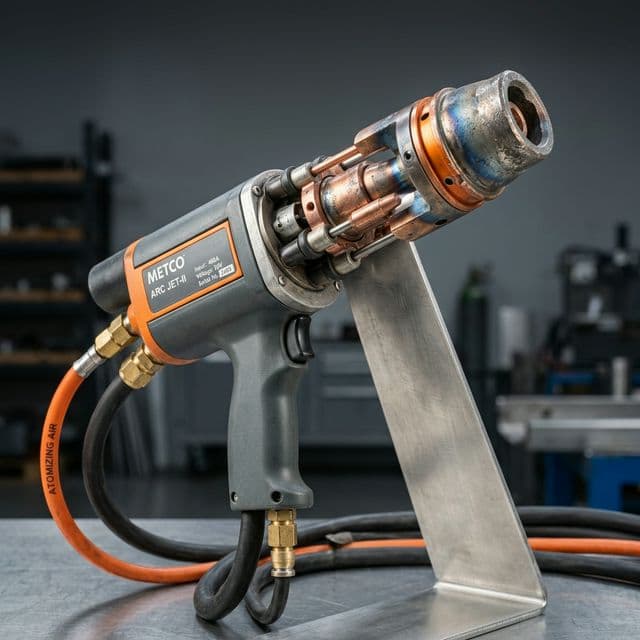
Zinc and Zinc-Aluminium
The coating applied by metallizing. Sprayed zinc, aluminium and the Zn-Al 85/15 alloy protect structural steel cathodically for decades — and unlike paint, they keep protecting at a scratch, a cut edge or a drilled hole because the coating corrodes in place of the steel.
Read the datasheetFour Questions That Decide The Material.
What is actually wearing the part?
Hard particle abrasion, metal-to-metal galling, cavitation, hot gas erosion and atmospheric corrosion are five different failure modes with five different answers. A hardness number on its own tells you almost nothing about which coating will survive.
How hot does the surface get in service?
This is usually the deciding question. Tungsten carbide is the best abrasion coating up to about 500 °C and degrades above it; chrome carbide takes over to roughly 900 °C. Getting this wrong turns a premium coating into a consumable.
Is the geometry line-of-sight?
Every thermal spray process needs to see the surface. Deep bores, blind pockets and shadowed features may rule out spraying entirely, regardless of which material would otherwise be ideal.
How will it be finished?
Carbide coatings need diamond grinding. If the finishing route does not exist in the shop, the coating specification is incomplete — and a sealing surface at Ra 0.2 µm is not achievable as-sprayed.